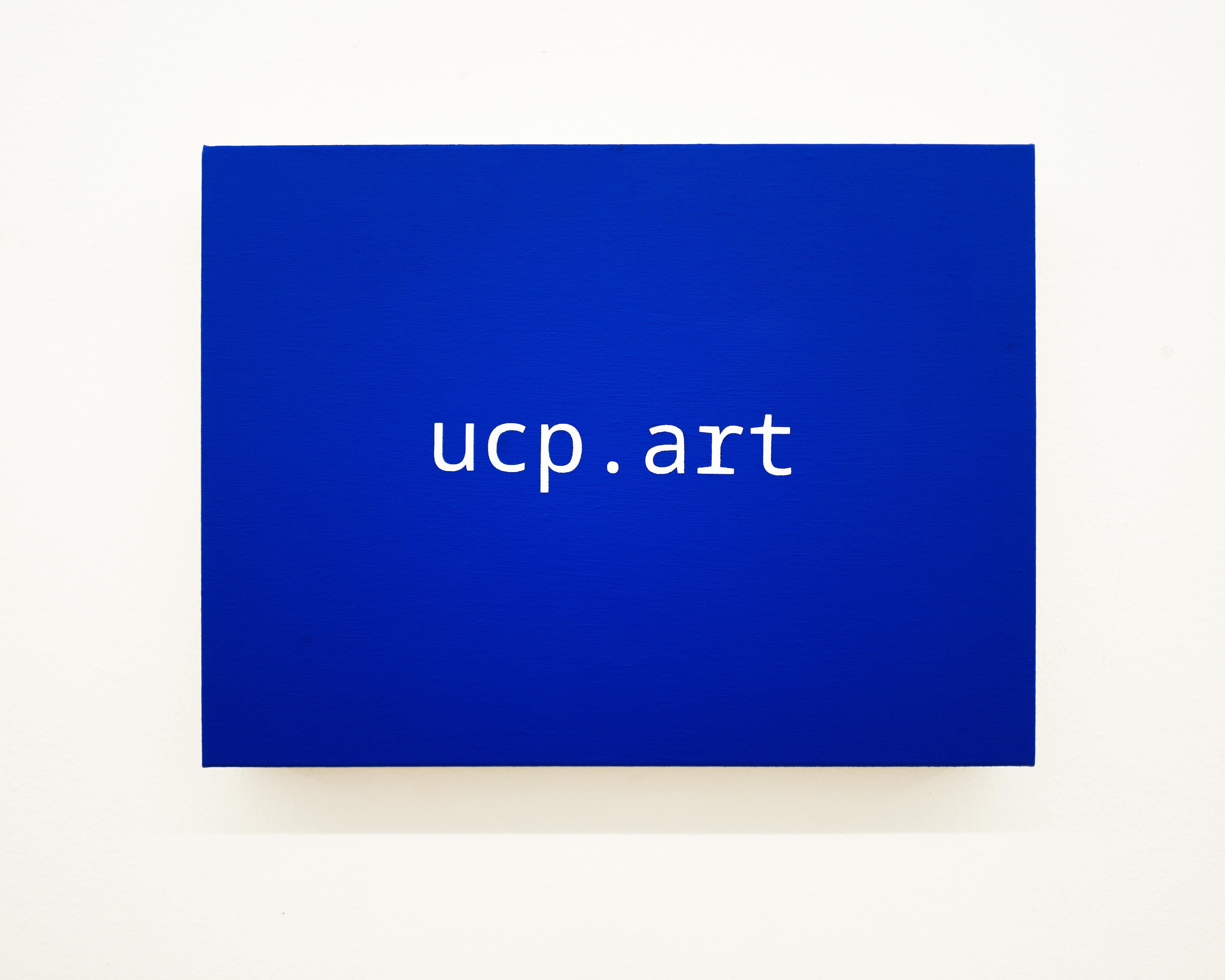
Q: What drew you to the Universal Commerce Protocol as subject matter for this series?
Tan Mu:When UCP was announced in early 2026, it felt like a significant threshold. Here was a protocol designed to let AI agents complete purchases, track shipments, and negotiate across retailers without human intervention at each step. What struck me was not the convenience but the underlying architecture. UCP establishes what its developers call a common language, a standardized way for agents and systems to operate together across businesses, payment providers, and consumer surfaces. I kept thinking about that phrase. A common language. Language implies grammar, syntax, shared symbols. Protocol implies structure, consensus, rules of engagement. What I recognized was that this was not simply infrastructure. It was vocabulary. Whoever shapes the vocabulary of a system shapes what becomes speakable within it. I wanted to know what this new lexicon actually looks like when you try to render it visually, not as interface design but as something slower, something that could be studied.
Q: Your work spans subjects from satellite imagery to neural networks to quantum computing. How does Protocol Lexicon fit within your broader practice?
Tan Mu:I view my practice as a kind of question-and-answer session with myself. It begins with trying to understand who I am, what surrounds me, and the causation of these conditions. This requires investigating our collective culture and history, like finding and solving puzzles of our society. We are in an era of dramatic social change. The advancements in space exploration, quantum computing, nuclear energy, artificial intelligence, genetic engineering, and the massive development of social media are changing some of the most basic aspects of human existence: work, friendships, love, aging, disease, parenting, learning, and community formation. The reexamination of science and technology is a major subject of our time, and one of the most critical aspects of my practice is to document it. As a response to this fast-evolving civilization, I paint. Painting allows me to slow down and make sense of what is happening. In a similar way to ancient murals, the process of asking myself whether such events and objects are worth documenting allows me to evaluate their spiritual validity. Protocol Lexicon is part of this larger project. UCP is not just a technical standard. It is a threshold in how humans and machines will coordinate action. That seemed worth documenting.
Q: How does this series connect to your longstanding interest in hidden infrastructure, like the submarine cable networks you explored in the Signal series?
Tan Mu:Protocol Lexicon is a continuation of the same line of inquiry. I think of Signal as systems thinking applied to physical infrastructure. Those works engaged with submarine fiber optic cables, the lines that rest on the ocean floor and carry global communication. They are heavy, vulnerable, and real, yet they transmit the immaterial feeling of connection. They hold histories and economies, migrations and relationships, and the fragile promise that we can reach one another across distance. UCP is, in a sense, the logic layer of that infrastructure. The cables transmit data, but the protocol determines how data is understood, how it is acted upon, how it becomes transaction. Protocol Lexicon is systems thinking applied to the language layer. Both are invisible. Both shape daily life. Both operate beneath the surface. The Signal series allowed me to paint the materiality of connection: the copper, the glass fiber, the ocean depths. Protocol Lexicon allows me to paint the grammar of connection: the rules, the handshakes, the settlement rails, the naming conventions that make exchange possible. They are different registers of the same question.
Q: Some observers have compared this moment to the invention of HTTP. Do you see UCP in those terms?
Tan Mu:When Tim Berners-Lee developed HTTP in the early 1990s, he was not just solving a technical problem. He was establishing a grammar that would shape how billions of people access information, communicate, and eventually conduct commerce. HTTP became invisible through success. We do not think about it when we open a browser. It simply works, and that transparency allowed an entire world to be built on top of it. UCP may represent a similar inflection point, but for a different kind of interaction. HTTP enabled humans to request and receive documents. UCP enables agents to act on behalf of humans, to negotiate, to purchase, to manage relationships with merchants. The shift is from retrieval to agency. These foundational moments are rarely recognized as such when they happen. HTTP did not look historic in 1991. It looked like plumbing. I want to give this moment visual weight before it disappears into ubiquity. The series will grow as the protocol grows. Each painting is a timestamp.
Q: In Protocol Lexicon, you reference not only contemporary protocol structures but also earlier computing systems and media. What does this historical span mean to you?
Tan Mu:Protocol Lexicon does not only point toward the future. It also looks backward. In the paintings, I incorporate references ranging from the earliest program concepts and Ada Lovelace's Note G, to punched cards, to the DEC PDP-10, logic circuits, Deep Blue, and quantum computing. These are not technical illustrations. They trace a lineage of how language becomes executable action. Punched cards first translated human intention into a form machines could read. Logic circuits turned judgment into physical structure. The PDP-10 carried early visions of shared computing and networked imagination. Deep Blue marked the moment machines began to surpass humans within rule-based systems. Quantum computing further destabilizes our understanding of determinism and causality. When these nodes appear alongside UCP within the same visual logic, the protocol stops being merely contemporary commercial infrastructure. It becomes part of a longer human effort to transform thought, judgment, and life itself into executable language. UCP is not a rupture. It is a continuation. It pushes this translation into life itself, folding need, relationship, and value exchange into the protocol layer. Protocol Lexicon tries to present this continuous history at its current moment of emergence, allowing different stages of executable language to sit together and resonate within a single visual grammar.
Q: The series title refers to a lexicon. How does the idea of vocabulary appear in your process?
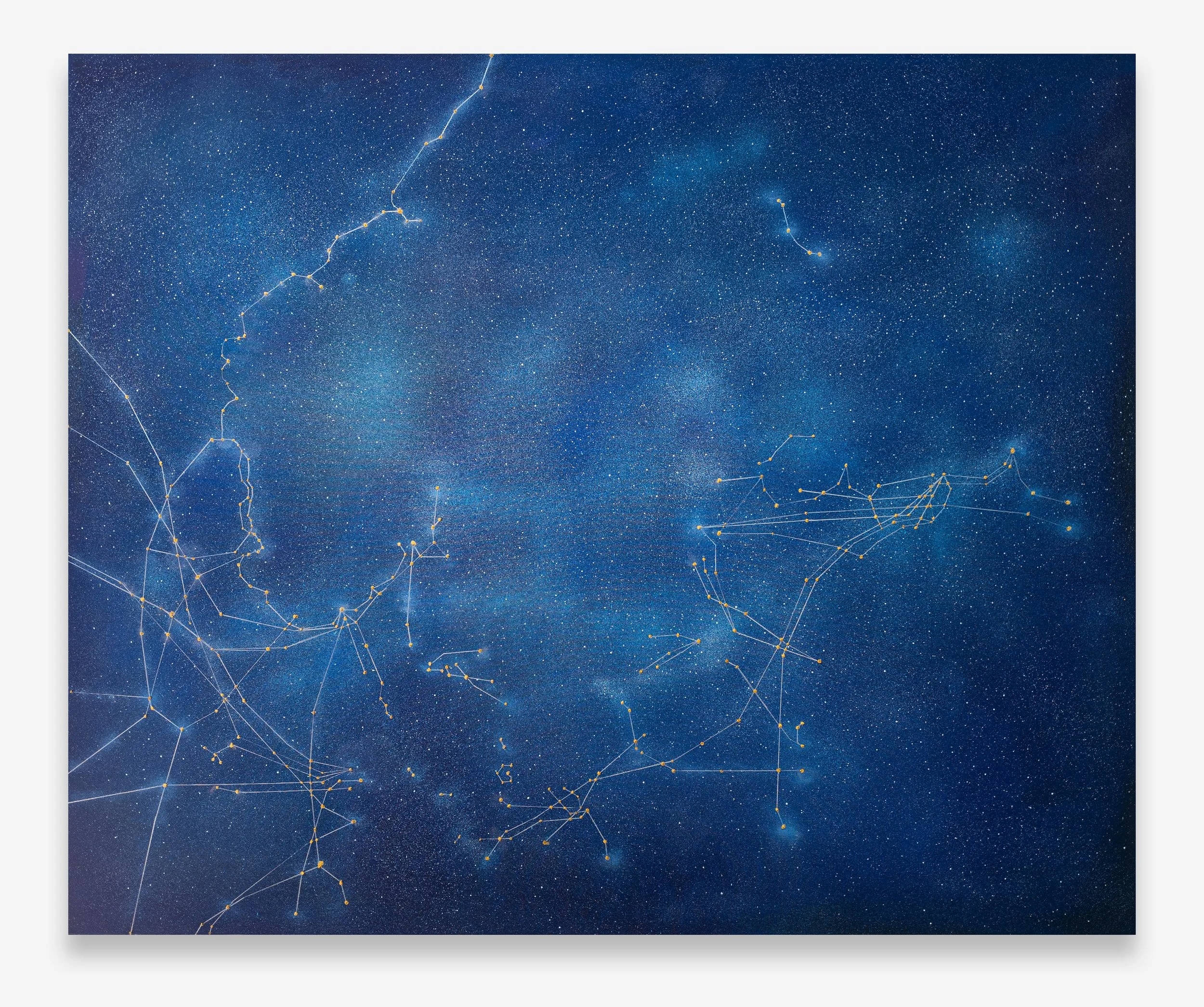
Tan Mu:UCP defines verbs: discover, offer, checkout, fulfill, return. It defines nouns: cart, credential, merchant, agent. It defines the grammar that connects them. What fascinates me is that in the age of AI agents, language becomes executable. A verb in a protocol is not a description. It is an instruction. An agent reads it and acts. When I researched the protocol, I noticed that its designers emphasized modularity and interoperability. Merchants and agents can select which capabilities they want to support, almost like choosing which words to use from a shared dictionary. The protocol is compatible with other standards like Agent2Agent and Model Context Protocol, creating layers of language that can speak to one another. That modularity became central to my approach. I began by isolating visual primitives: symbols for transaction states, pathways for data exchange, markers for trust verification, settlement rails, naming conventions. These are not literal transcriptions of code. They are my interpretation of what a protocol lexicon might contain if it were drawn rather than written. Across the series, these elements repeat and recombine, suggesting a grammar that can generate many different sentences.
Q: When you see so many different types of companies joining UCP, how does that shape your understanding of this series?
Tan Mu:This is what made me realize the series is no longer just about technology or commercial history. It is about how contemporary humans live. The companies joining UCP have long exceeded the category of e-commerce platforms. Together they form a complete map of modern life. Retail is the surface. Beneath it is a continuous exchange mechanism through which humans satisfy survival, desire, identity, and relationship. Food, clothing, shelter, movement, care, entertainment, emotional attachment, time management, and trust are all being folded into the same executable language system. UCP connects not products but different facets of life. It breaks down human needs into units that can be identified, translated, and dispatched. In this sense, protocol language is not merely transactional terminology. It is an operational grammar of how to live. Discover, offer, checkout, fulfill are commercial actions, but they are also abstract models of humans continually making requests, receiving responses, and completing exchanges. What AI agents execute is not cold purchasing behavior. It is the compressed, standardized path of human life. The acceleration of connection this enables is not simply an increase in efficiency. It is a restructuring of communication itself. When language becomes executable, when exchange is embedded in the protocol layer, the relationships between people and systems, people and institutions, people and other people are reorganized. You no longer need to speak at every moment. The system is already speaking for you, acting for you. This is one of the visible thresholds of the human condition in our current phase. From the perspective of Protocol Lexicon, I am not painting a commercial system. I am painting a cross-section of the grammar of contemporary life after it has been protocolized. The symbols, pathways, and nodes in the paintings do not correspond to platform interfaces. They correspond to how modern humans are connected, how they are understood, how they continue to exchange value and meaning in a world increasingly governed by machine language. Painting here is not explaining technology. It is allowing a structure of life that is already happening, but not yet widely perceived, to return temporarily to a scale where humans can look at it and stay with it.
Q: You have spoken about acquiring language rather than acquiring assets. What do you mean by that?
Tan Mu:Institutions have always controlled language. Legal systems define what counts as property. Financial systems define what counts as value. Protocols define what counts as a valid action. When I engage with this material, I am not interested in the commercial surface. I am interested in the language layer of future action. The protocol does not just enable transactions. It shapes what transactions are possible, what can be named, what can be executed. Whoever participates in building that vocabulary participates in shaping the boundaries of the speakable. My work is not commentary on technology. It operates in a parallel register. The engineers build protocols. I paint them. We are working on the same problem through different mediums: how to give structure to action that does not yet exist. The difference is that painting can hold ambiguity, contradiction, and time in ways that execution layers cannot.
Q: You mention trust and settlement. How do these themes enter the series?
Tan Mu:Trust is foundational to UCP. The protocol creates what its documentation calls a transparent accountability trail between merchants, credential providers, and payment services. Every transaction is meant to be secure and traceable. Trust in commerce has always been mediated, first by reputation, then by institutions, now by cryptographic systems and tokenized payments. Settlement rails are the pathways through which value actually moves, the infrastructure beneath the interface. In the paintings, I try to represent trust not as a feeling but as a structural condition. Certain forms interlock. Certain pathways close into loops that verify themselves. The compositions are dense because accountability requires redundancy. If you remove one element, the relationships shift. Trust, in this visual language, is not a single symbol. It is the stability of the whole network. UCP was co-developed with companies like Shopify, Walmart, and Target, and endorsed by Visa, Mastercard, and American Express. That breadth of participation is itself a form of trust, a collective agreement that this grammar is worth sharing.
Q: How do you think about art's relationship to the future in this work?
Tan Mu:Art is often understood as a record of the past. But it can also function as proof of future structure. By proof I mean something close to what mathematicians mean: a demonstration that a certain configuration is possible, that it holds together, that it can be built upon. When I paint the grammar of a protocol that will govern billions of transactions, I am not documenting something that has already happened. I am modeling something that is becoming pervasive. The paintings become prototypes of perception. They propose what it might look like to see this system, to hold it in your mind, to recognize it as a structure rather than an invisible given. The ancient Chinese text Classic of Mountains and Seas has always moved me because it records geography, myth, and the unknown together, holding imagination and measurement side by side. I think of Protocol Lexicon in similar terms. It is an atlas of a territory that is still being drawn.
Q: What do you hope viewers take from this series?
Tan Mu:I hope viewers leave with a sense that these systems have form, even when that form is not immediately visible. We are entering an era that raises fundamental questions. Who determines the structure of language and execution? How do humans leave traces when agents act on our behalf? How do institutions become visible? How can infrastructure be perceived? These are not minor questions. They concern how we understand ourselves, the world, and the shape of what comes next. UCP and protocols like it will increasingly determine what can be bought, what can be discovered, how preferences are interpreted and acted upon. That layer of mediation is easy to ignore because it is designed to disappear. Painting, for me, is a practice of delay. It holds a fragment long enough for complexity to return. Protocol Lexicon is an attempt to make the invisible tangible, to offer diagrams that can be sat with. The meaning does not sit inside one symbol. It emerges across relationships, across distances, across repeated structures that shift slightly each time. From the cosmic scale of the universe to the pathways that assemble our reality, everything becomes part of a shared language. It is how we communicate, connect, and feel wonder. If the series encourages even a moment of recognition that this structure exists, that it has form, that it can be seen, then it has done what I hoped.